Monday, 22 August 2011


The Death Of John Kennedy

Why Nixon resigned instead of facing impeachment.


Nixon resigned over an obstruction of justice charge (with some of the legal groundwork prepared by a young Hillary Rodham). Nixon resigned gracefully, the media declared the incident over and Gerald Ford declared that it was time to "put the whole affair behind us and move forward". This was done because the last thing anyone wanted in Washington D.C. was an impeachment trial. Even Nixon's worst enemies dared not allow it. The reasoning was simple. Sooner or later, someone would ask the following question.
"Why, when Nixon's re-election was a study in foregone conclusions, was it necessary to break into the DNC headquarters at the Watergate?"

The answer to that question, never asked by politician, never asked by a servile media, was THE dark secret that could not be revealed; the secret that would have brought down the entire government!

Years later, it did come out what had been the motive for the break-in. It was connected to what Nixon called "Hanky Panky" on the White House tapes.

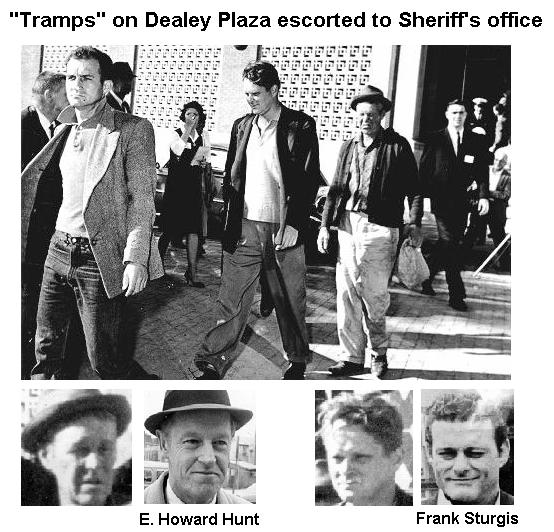
The DNC had gotten copies of the photographs taken of the three tramps in Dealey Plaza, and identified two of them as long time Nixon henchmen E. Howard Hunt and Frank Sturgis. This put the DNC in a position to at least blackmail the President, if not expose him outright. This is why E. Howard Hunt lead the break-in; it was his own ass he was trying to save.


 

The First Great American Coup: JFK Assassination

The First Great American Coup: JFK Assassination

New released documents from the CIA about the bay of pigs


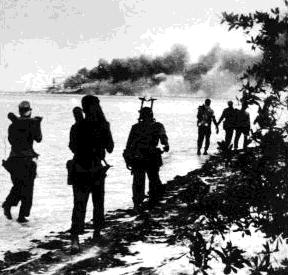
MIAMI (AP) — Newly declassified U.S. documents show a CIA operative accidentally fired on friendly pilots during the 1961 Bay of Pigs invasion of Cuba.
The B-26 bombers flown by the Cuban exiles were disguised to look like Cuban military planes, but the ruse worked too well, the documents indicated. It was not clear, though, if anyone was hurt.
The documents also show U.S. officials authorized limited use of napalm on military targets and to protect the invasion's beachhead area.
Earlier this month, the U.S. made public all but one of five top secret volumes covering the CIA's official history of the failed attack on Fidel Castro's fledgling government. The move came in response to a lawsuit filed in April by the independent, Washington-based National Security Archive. The nonprofit research group has sought for years to declassify all five volumes on the invasion.
The Archive posted more of the documents on its website Monday.
In them, CIA operative Grayston Lynch, who was in charge of guns aboard one of the landing craft that remained off the Cuban coast during the invasion, recalled warning the exile pilots to "to stay away from us, because we couldn't tell them from the Castro planes."
He said the B-26 bombers failed to heed his warning.
"We ended up shooting at two or three of them," he said, explaining, "our planes were a little nosey, and they wanted to take a look at the action."
In the report, two U.S. pilots described dropping bombs and napalm on Cuban troops that "left the convoy badly messed up."
Initially, officials hesitated to use napalm because it "'would cause concern and public outcry,'" the documents indicated. But by the second day of fighting, that notion "had gone by the board in favor of anything that might reverse the situation in Cuba in favor of the (exile) Brigade forces."
The invasion by CIA-trained Cuban exiles was a pivotal moment in U.S.-Cuba relations and has become something of a "what not to do" case study in U.S. covert actions.
"We are one step closer to having a complete record in the worst debacle of U.S. clandestine operations," said Peter Kornbluh, who heads the Archive's Cuba project. He vowed to continue pressing the government to release the fifth volume.
About 1,300 exiles landed in Cuba on April 17, 1961. Two days earlier, the exile pilots had helped destroy portions of Cuba's small air force, but Castro had enough planes remaining to take out their supply ships. Nearly 300 Cuban and exile fighters were killed in the invasion. A few captured exiles were executed and others were held prisoner for years. Most of the more than 1,200 captured exiles were released by Castro a year later in an exchange brokered by the Kennedy administration.
___
On the web: National Security Archive: http://www.gwu.edu/~nsarchiv/NSAEBB/NSAEBB353/index.HTML

Friday, 17 December 2010

mark lane new film


An early preview of a new documentary film by Mark Lane, author of "Rush To Judgment" and "Plausible Denial." The new film A RUSH TO JUDGMENT is still in production with an anticipated release date in 2011. The film updates the watershed 1967 film with new interviews and new findings by Lane regarding the JFK assassination that remains unresolved after nearly 50 years.

This preview includes an interview with Abraham Bolden, the first African American secret service agent who talks about the attitudes of the men who served on President Kennedy's secret service detail on November 22, 1963.

http://www.youtube.com/watch?v=px-7IRJpMZE

Sunday, 21 November 2010

Oswald In Mexico


ccording to the Warren Commission, Lee Harvey Oswald traveled to Mexico City in the fall of 1963, in search of a visa for travel to Cuba and the Soviet Union. He failed in that effort and returned to Dallas, where 7 weeks later he shot President Kennedy.

Allegations of a Cuban or Soviet conspiracy, based on events and stories related to this visit, bloomed in the aftermath of the assassination. They were apparently instrumental in the creation of the Warren Commission, and over the years more and more has trickled out regarding a trip which ultimately remains enigmatic.

The record on Mexico City is wildly muddled and mysterious. Was Oswald impersonated there? Who is the "mystery man" caught by photo surveillance? Why are CIA records on the trip at sharp variance with participant's memories? Were the witnesses who reported events indicating a Communist conspiracy telling the truth, spinning false tales, or perhaps reporting on staged incidents? Did Oswald, or someone pretending to be him, threaten the life of JFK in the Cuban Embassy?

Despite the mysteries, one thing is certain. The events in Mexico City had a profound effect on the federal government's response to the assassination. President Johnson invoked fears of nuclear war in putting together the Warren Commission, finally enlisting a recalcitrant Earl Warren by telling him "what Hoover told me about a little incident in Mexico City."

The Fourteen Minute Gap - A short documentary about an erased Presidential phone call in which Johnson and Hoover a Mexico City impersonator.

Oswald's Visits to the Cuban and Soviet Embassies - Discusses the Oswald embassy visits and the resulting CIA cable traffic.

The Mexico City Tapes - Focuses on recorded telephone conversations of a man using Oswald's name, who was apparently not Oswald.

Valeriy Kostikov and Comrade Kostin - Examines the KGB Department 13 "wet affairs" connection and the curious letter written to a "Comrade Kostin."

Photo Surveillance and the Mystery Man - Looks at the man caught on surveillance cameras, apparently originally thought to be Oswald.